
 English
 Français
REAL ESTATE MANAGEMENT HISTORY
As I told in the previous issue related to “the history of the Companies from Geneva and Vaud”, released in 2020, the job of manager began in 1825 thanks to two brothers, Jean-Marc and Paul Bouffier, who created the first “Real Estate Business Office”. Subsequently, it became Régie L'Huillier, which is now in the hands of Paul Epiney from the Comptoir Immobilier in Geneva. But the story that began in Geneva, subsequently developed not in the canton of Vaud, as one might think, but in Fribourg, where the first real estate agency was created in 1867, was about the house “de Weck Aeby”.
Initially, the house “de Weck Aeby” was a private bank founded by Hippolyte de Weck and Paul Aeby. The canton of Fribourg, member of the confederation since 1481, was in a difficult economic situation, having lost the Sonderbund war of 1847. The contribution of a private banker to the economy was essential.
Mister de Weck and his cousin Paul Aeby (town trustee, deputy and national councilor until 1898) therefore created the only investment bank in the canton.. The two founders therefore devoted all their energy to garanting loans, which enabled investment to be activated and the economy to be stimulated. These two visionaries also played a very important role in the development of railways in west Switzerland..
[...]
We therefore wish you a pleasant discovery and hope that it will allow you to have a different vision of a profession very often overlooked and little appreciated, but which nevertheless makes from "the relationship with others" its leitmotif...
Pierre-André Dumont de Cuisery
Publishing DirectorFor the full version of the editorial read the article in the downloadable book.
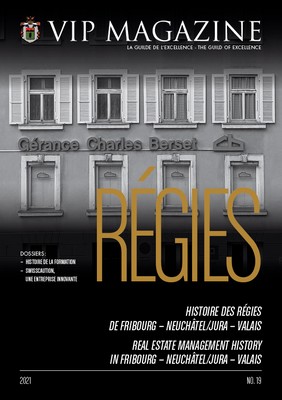
Cover Page from n°19